Digital Marketing in 2026: A Simple Guide for Sustainable Growth
1. Introduction: The State of Digital Marketing in 2026
If you have been following digital marketing for a few years, you may have noticed that many old rules no longer work the same way. Earlier, businesses tried to rank on search engines by publishing a large number of articles and repeating the same keywords again and again. That method worked for some time, but things have changed.
Today, search engines and AI systems are much smarter. They try to understand the real meaning behind a search. Instead of showing pages that only contain keywords, they show pages that actually answer a person’s question.
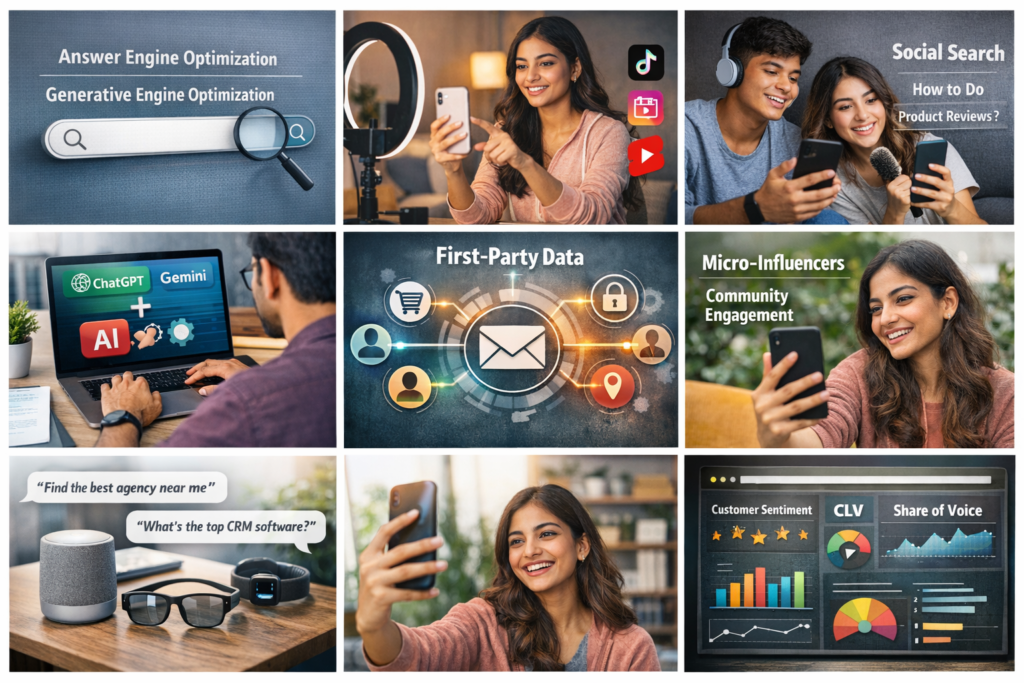
Because of this shift, marketers are now focusing on Answer Engine Optimisation and Generative Engine Optimisation. In simple words, content is now written to give clear answers that people and AI tools can easily understand.
In this guide, I will walk you through the main digital marketing changes that are shaping 2026. The goal is simple. I want to help you understand how modern tools and strategies can support long term and sustainable growth.
2. Master Search Intent Over Keywords
In the past, keywords were treated like the most important part of SEO. Many marketers focused on placing the same phrase again and again inside an article. Sometimes the content sounded unnatural, but it was still done because rankings were the main goal.
Now the focus has shifted to search intent. Search engines try to understand why a person is searching for something. The reason behind the search matters more than the exact words that were typed.
For example, when someone searches for “best CRM for small business”, they are not only looking for a definition. They want comparisons, benefits, and maybe a recommendation. Search engines try to show pages that answer these needs clearly.
Because of this change, many marketers now build content hubs instead of publishing random blog posts. A content hub usually has one main article that explains a topic in detail. Then several smaller articles are linked to it and they cover related questions.
This structure helps search engines understand your expertise on a topic.
One simple tip can help you a lot here. Write your headings like real questions. Think about how someone would speak to an AI assistant.
For example, you can use headings like:
What is the best CRM for a growing business?
How can automation improve customer management?
When content is written this way, it becomes easier for both people and AI systems to understand.
3. Use Short Form Video for Faster Engagement
Short form videos are now one of the fastest ways to reach people online. Platforms such as TikTok, Instagram Reels, and YouTube Shorts have changed how content is consumed.
Most users watch these videos on their mobile phones. Because of this, attention spans have become shorter. A viewer usually decides within the first few seconds whether they want to continue watching.
This is where the three second rule becomes important. If the opening of the video is interesting, people will stay. If it feels slow or confusing, they will simply scroll away.
Another important change is the growing popularity of authentic content. Earlier, brands invested heavily in highly polished advertisements. Today, simple and natural looking videos often perform better.
User Generated Content is a good example. These videos are created by real users or creators who share their honest experiences. Because the content feels genuine, viewers trust it more.
So the lesson is clear. Short videos work best when they are simple, honest, and straight to the point.
4. The Rise of Social Search
A very interesting trend has appeared in the last few years. Many young users now treat social media platforms like search engines.
Instead of opening a traditional search engine, they search directly on apps like TikTok or Instagram. They look for product reviews, tutorials, and quick guides there.
This behaviour is especially common among Gen Z and Gen Alpha users. They prefer visual explanations because they are easier to understand.
Because of this change, videos should also be optimised for search.
You can do this by adding clear keywords in captions. Relevant hashtags should also be used. Important phrases can be placed as text inside the video as well.
When these elements are used properly, the platform understands the topic of the video better. As a result, the content is shown to more people who are searching for similar information.
5. Using AI Without Losing the Human Touch
Artificial intelligence has become a common tool in digital marketing. Platforms such as ChatGPT and Gemini help marketers generate ideas, analyse data, and draft content faster.
However, because these tools are available to everyone, basic AI generated content has become very common. If an article sounds generic, readers usually notice it quickly.
This is why the human touch is more valuable than ever.
When personal experiences are shared, the content becomes more relatable. When original research or real examples are included, trust is built naturally. A clear brand voice also makes the content stand out.
AI should be treated as a helpful assistant. It can support research, outline ideas, and speed up the drafting process.
But the final content should always be edited by a human. When a person reviews and improves the article, clarity is added and the message feels more genuine.
6. Personalisation and First Party Data
Data privacy has become an important topic in digital marketing. Regulations like the General Data Protection Regulation and the California Consumer Privacy Act have introduced stricter rules for how companies collect and use customer information.
Because of these rules, third party cookies are slowly disappearing.
So businesses are now focusing on first party data. This means information that customers willingly share with a company. It can come from website sign ups, purchases, or email subscriptions.
Building an email list is one of the best ways to collect this data. When someone subscribes to your newsletter, they are showing interest in your brand.
Email marketing continues to deliver strong results even in 2026. It allows businesses to communicate directly with their audience and share useful updates, offers, and content.
Because the communication is personal, the relationship with customers becomes stronger.
7. Optimising for Voice and Ambient Search
Search behaviour is changing again. Many people now use voice commands instead of typing queries.
Devices powered by assistants such as Google Assistant and Amazon Alexa allow users to ask questions while doing other tasks. Searches can happen while cooking, driving, or walking.
This is known as voice and ambient search.
Voice searches usually sound more natural than typed queries. People tend to speak in full sentences.
For example, someone may type “digital marketing agency near me”. But when speaking, they may ask, “Where can I find the best digital marketing agency near me?”
Because of this, content should include long tail phrases and question based headings.
When articles answer real questions clearly, the chances of appearing in voice search results increase.
8. Building Trust Through Community Led Growth
Trust has become one of the most important factors in marketing today. Many brands are now working with micro influencers instead of big celebrities.
Micro influencers usually have smaller audiences, but their followers are highly engaged. Because the connection feels personal, their recommendations are trusted more.
Communities also play a big role in brand growth. Platforms like Reddit and Discord allow people with similar interests to interact and share ideas.
Brands that participate in these communities often build stronger relationships with their audience.
Helpful answers can be shared. Questions can be solved. Over time, loyalty is built naturally.
When people feel heard and supported, they are more likely to trust the brand.
9. Essential Digital Marketing Metrics to Track
In the past, marketers focused mostly on clicks and impressions. These numbers are still useful, but they do not show the full picture.
Today, deeper metrics are also analysed.
Customer sentiment helps businesses understand how people feel about a brand. Reviews, comments, and social discussions provide valuable signals.
Another important metric is Customer Lifetime Value. It shows how much value a customer brings to the business over time.
Marketers also measure share of voice, which shows how often a brand appears in search results and AI generated answers.
To track this data effectively, many businesses use tools such as Google Analytics, HubSpot, and Semrush.
These platforms combine information from different channels. As a result, smarter marketing decisions can be made.
10. Conclusion: Staying Agile in a Fast Moving Market
Digital marketing will continue to change. Because of this, businesses must stay flexible.
New ideas should be tested. The results should be studied. Then improvements should be made step by step.
One thing is very important to remember. Digital marketing is not a task that can be completed once and forgotten.
It is an ongoing conversation with your audience. When businesses listen, learn, and adapt, long term growth becomes much easier.